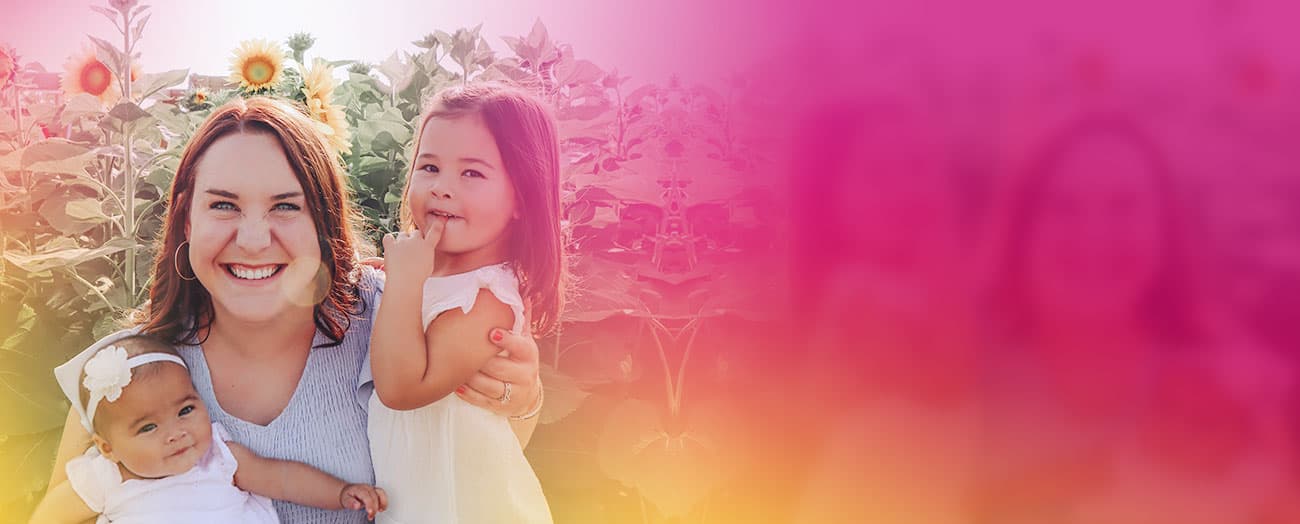
Each of Danielle Pauer’s three pregnancies has been drastically different. When she was 20 weeks pregnant with her first daughter, she found out the baby was seriously ill and had a chromosomal abnormality. Sadly, the baby did not survive. “We suffered a really big loss when it comes to her, our first daughter and first pregnancy,” Danielle says.
When Danielle became pregnant with her second daughter, she feared that she would experience the same hardships as she did with her first child. “We had a really long labor and ended up needing an emergency C-section,” she says, with her daughter not breathing and needing to be resuscitated after birth. “At that point, I was personally OK with never having children again. But we ultimately have always wanted more than one kid.”
While expecting their third and final daughter, Danielle tried to plan ahead as best she could. For her, that meant a planned C-section. “We came across Versiti and being able to donate my placenta,” she says. “Overall, it was a natural gut instinct to do it,” she says. “I didn’t know what placenta tissue could be used for. Seeing that it could be used for skin grafts or to heal burns … for a one-time-use organ, it was really interesting.”
After going through so much during all three of her pregnancies, it was important to Danielle to find the silver lining. “We felt as though that was special for this pregnancy, when each pregnancy had its trials and tribulations,” she says. “It felt special to do something so positive and secure, when a lot of things didn’t feel secure.”
Danielle encourages other expectant mothers with planned C-sections to do their homework and learn more about placenta donation. “It’s not something that’s going to affect any part of your birth plan for you or your child,” she says. “Do what feels most comfortable for you—and don’t feel guilty about it.”
Give the Gift of Healing After Birth
If you have a planned C-section, you may be able to donate your placenta and help patients with serious burns and hard-to-heal wounds. Placenta donation does not affect the birth or medical care of you or your baby, and the placenta is collected after delivery.
Talk with your doctor about how you can participate in Versiti’s placenta donation program, or learn more about placenta donation.