Versiti - Christian Kastrup, PhD | Versiti Blood Research Institute
Christian

Kastrup, PhD

Senior Investigator and Program Co-Leader

Transfusion Medicine, Vascular Biology & Cell Therapy

Senior Investigator and Program Co-Leader

Ziegler Family Chair for Research

Professor
Department of Surgery, Division of Trauma and Acute Care Surgery
Departments of Biochemistry, Biomedical Engineering, and Pharmacology and Toxicology
Medical College of Wisconsin

Education and Training

Postdoctoral Training
Massachusetts Institute of Technology
Robert Langer Lab, Department of Chemical Engineering; 2011

Doctoral Training
PhD, Chemistry (Rustem F. Ismagilov, Supervisor)
University of Chicago, 2008 

Laboratory Highlights

38
Fellowships & Awards
7
Graduate Students
8.5
Impact Factor
16
Patents Filed
3
Post Docs
60
Publications
60
Undergrads Mentored

Research Interests

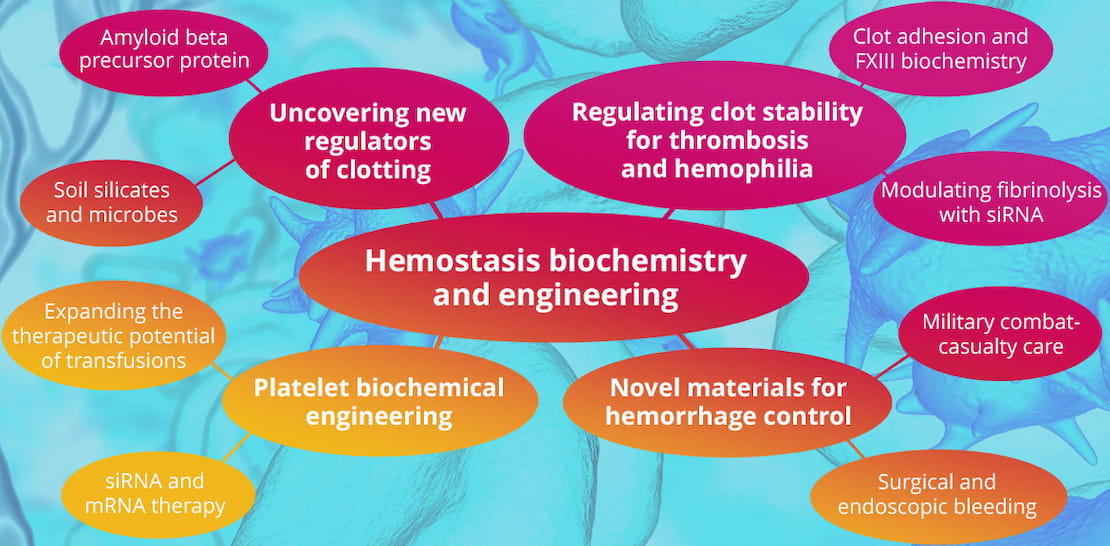
Spidergram Illustration

Christian Kastrup leads a group of biochemists, engineers and surgical residents working to gain a deeper understanding of how blood clotting is regulated and can be controlled therapeutically. Severe hemorrhage is a leading cause of death for those aged 1 to 46 years, while thrombosis is a major contributor to death and disability with age. We use proteins and cells naturally involved in blood clotting to develop novel technologies for addressing unmet needs in controlling severe bleeding and preventing unwanted clotting.

The research in our lab is focused on these questions:

  1. What new technologies are needed to halt bleeding in the most severe cases of hemorrhage?
  2. Can platelets be genetically modified to enhance their hemostatic activity, or perform new therapeutic functions?
  3. Can clot stability be altered to treat hemorrhage or thrombosis?
  4. Do soil and microbes in wounds influence severe bleeding?

We use a variety of biochemical assays, RNA biotechnology, biomaterial and lipid nanoparticle synthesis, imaging, patient blood, microfluidics and human blood, and small and large animal models to answer these questions.

Controlling clot stability to regulate hemostasis using RNA-based gene therapy

During hemorrhage, fibrin is covalently crosslinked to itself and the vessel wall to form a meshwork that seals the wound. If this meshwork is not stably linked to the vessel wall, the wound is not effectively sealed, leading to re-bleeding. This process is mediated by coagulation factor XIIIa (FXIIIa), a transglutaminase enzyme found in platelets and blood. We are currently exploring the role of FXIII, fibrinogen, and other modulators of clot degradation in severe hemorrhage. To do this, we are continuing to develop novel RNA therapies utilizing lipid nanoparticles and mRNA, siRNA, and gene editing components.

We are also utilizing these RNA gene therapies to understand and control thrombosis. Thrombosis is currently treated with anticoagulants that target events upstream of fibrin crosslinking to prevent additional clots from forming in the patient. However, these carry the risk of unwanted bleeding. We hypothesized, and are now testing, that a safer approach is to instead inhibit the stability of fibrin, which would allow an initial plug to form and seal the wound, but also increase the susceptibility of the clot to degradation.

Propelling therapeutics deep into wounds

Severe hemorrhage can be triggered by trauma, surgery, or childbirth, and requires timely treatment with blood products and hemostatic agents to stop the blood loss. The most severe cases of hemorrhage are characterized by a widespread failure of the body’s blood clotting system, and bleeds can rapidly get out of control. Hemostatic agents are often applied topically into wounds to stop bleeding, but current agents are often ineffective in severe hemorrhage because they are flushed out of the wound by high blood flow.

To address this challenge, we have developed microparticles that propel upstream through blood and deliver therapeutics deep into wounds. These microparticles, loaded with a powerful pro-coagulant enzyme, thrombin, successfully reduced blood loss and mortality in small and large animal models of bleeding in trauma, surgery and endoscopy. These hemostatic products are being translated in collaboration with commercial and military partners.

Enhancing the function of platelets and megakaryocytes

Platelets are small, anucleate blood cells essential for hemostasis. In response to vascular damage, platelets activate and aggregate to form a plug to seal the wound and prevent blood loss. As part of this process, activated platelets release molecules that promote clot formation in a localized manner. 

Platelet transfusions are used to stop or prevent bleeding, but  are often ineffective during the most severe cases of hemorrhage when platelets become dysfunctional and their contribution to hemostasis is lost. We are developing ways to enhance the natural procoagulant function of platelets to improve their hemostatic efficacy.

We have developed an approach to load nucleic acids and proteins into platelets using lipid nanoparticles (LNPs). We have demonstrated that platelets loaded with thrombin formed clots significantly faster and stronger than un-modified platelets, even in blood plasma from patients with clotting defects. We are now exploring whether we can further extend the therapeutic function of platelets by using LNPs to deliver mRNA to the platelets. We are also investigating whether LNPs can deliver therapeutics to megakaryocytes, the precursor cells to platelets, to modify platelet function.

Investigating new mechanisms for controlling clotting

Coagulation is controlled by a complex network of reactions that were first described over 50 years ago. Research over the decades has led to a better understanding of the biochemistry of the coagulation network, yet questions still remain about aspects of blood clotting. Humans deficient in coagulation factor XII (FXII) do not appear to bleed spontaneously or excessively after trauma, leading to a debate over its role in blood clotting. FXII is activated by silicates, a major component of soil, to clot blood in vitro. Interestingly, FXII is  conserved in land-dwelling animals, but not in animals that do not live on soil, such as marine mammals. We therefore asked the question, is soil a physiological activator of FXII? If so, then FXII may have roles in blood clotting that have never before been characterized, and we are exploring these.

Overview of Publications and Funding

Research Grants Publications & Patents
  • Cascade Hemophilia Consortium
  • Military Medicine
  • Journal of Functional Biomaterials

Research Grants Publications & Patents
  • NIH R01 (Co-I)
    US Department of Defense- DMRDP
  • Arteriosclerosis, Thrombosis, and Vascular Biology
  • US Department of Defense- JWMRP Supplement
  • Journal of Thrombosis and Haemostasis
    Blood
  • NIH R01 (Co-i)
  • Science Translational Medicine

Research Grants Publications & Patents
  • NIH R01 (PI)
  • NIH R01 (MPI)
  • Science Advances
  • Military Medicine
  • Gastrointestinal Endoscopy
  • Provisional Patent on mRNA delivery using platelet transfusions

Research Grants Publications & Patents
  • US Department of Defense - JWMRP
  • NIH R01 (Col-I)
  • Advancing a Healthier Wisconsin
  • American Heart Association
  • Nature Communications (Accepted and in Press)
  • Journal of Trauma and Acute Care Surgery
  • Journal of Military, Veteran and Family Health
  • Journal of Thrombosis and Haemostasis
  • Endoscopy International Open
  • Molecular Pharmaceutics
  • Injury
  • Blood
  • Military Medicine
  • Nature Cardiovascular Research
  • Spin-out company: SeraGene Therapeutics
  • PCT patent on antifibrinolytic RNA-LNP
  • Provisional patent on mRNA for rare bleeding
  • Provisional patent on PAI-1

Research Grants Publications & Patents
  • NIH R01 (Co-I)
  • Nanomedicines Innovation Network-SI
  • MITACS
  • US Department of Defense - RDTRA
  • CIHR Project Grant
  • Science
  • Extreme Mechanics Letters
  • Transfusion
  • Journal of Thrombosis and Haemostasis
  • Endoscopy Open International
  • Provisional patent on RNA-edited platelets
  • Provisional patent on ADAMTS13

Research Grants Publications & Patents
  • US Department of Defense - MuLTI
  • US Department of Defense - PRMRP
  • Nanomedicines Innovation Network
  • CFI John R. Evans Leaders Fund
  • Blood
  • Endoscopy Open International
  • Journal of Thrombosis and Haemostasis
  • Blood Advances
  • Scientific Reports
  • Res Pract Thromb Haemost
  • Blood Advances
  • ACS Nano
  • Biochemistry
  • Provisional patent on RNA-edited platelets
  • Provisional patent on ADAMTS13

Research Grants Publications & Patents
  • Bayer Hemophilia Award
  • J. Thromb. & Haem.
  • Scientific Reports
  • Patent issued on hemostatic particles

Research Grants Publications & Patents
  • NSERC Discovery Grant
  • Blood Coag. & Fibrin.
  • J. Biol. Chemistry
  • J. Thromb. & Haem.
  • J. Thromb. & Haem.
  • Provisional patent on antithrombotic siRNA

Research Grants Publications & Patents
  • Novo Access to Insight
  • Scientific Reports
  • Ann. Rev. of Biochem
  • Laryngoscope
  • Provisional patent on liposomal thrombin
  • Spin-out company: CoMotion

Research Grants Publications & Patents
  • CFI John R. Evans Leaders Fund
  • J. Thromb. & Haem.
  • Shock
  • Thrombosis Research
  • Biomacromolecules

Training Environment, Philosophy, Supervision and Mentoring

Our lab is a positive and collaborative environment that prepares trainees for highly successful careers in science and engineering fields of academia, industry, and government. We work in a unique interdisciplinary environment, as we are located in the state-of-the-art Versiti Blood Research Institute. We collaborate closely with the Medical College of Wisconsin, providing multiple opportunities for knowledge translation, including community outreach, media contact, and commercialization of findings.

Trainees use these opportunities to build networks with leading researchers and industry partners to support their current research and to explore future career opportunities.

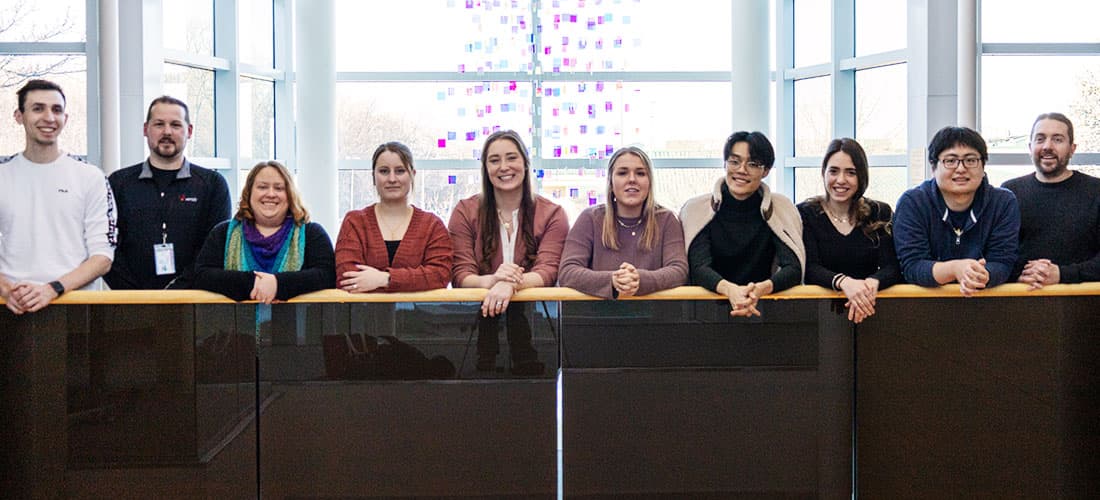
Kastrup Lab Personnel

We are a collaborative group dedicated to expanding opportunities in natural science and engineering, believing that participation from individuals of all backgrounds enhances excellence in research and training. Dr. Kastrup interacts with each trainee multiple times each week, both in group and individual meetings, to discuss research progress and to provide individualized support. Graduate students take the lead on writing their papers and assist in writing grants, developing scientific writing and fund-raising skills that are directly applicable to both academic and non-academic professions. This is demonstrated by their high success rate for awards and fellowships: each PhD student has received fellowships and awards of $8k to $130k, with a total of 7 fellowships from CIHR and NSERC since 2012.
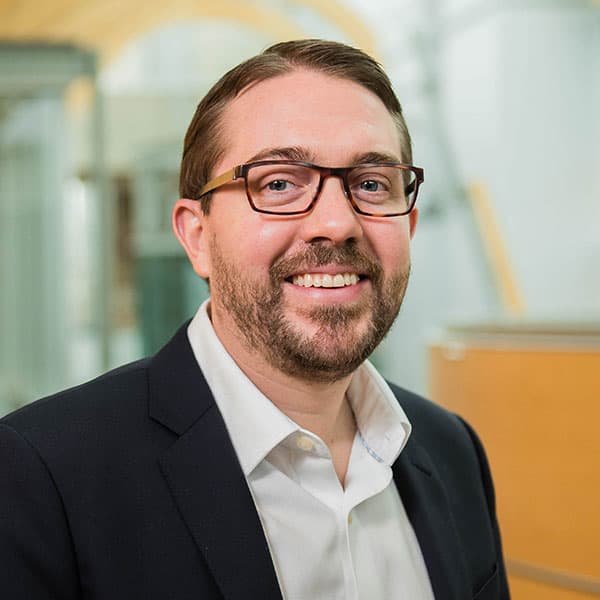
Principal Investigator

Christian Kastrup, PhD

Christian Kastrup is a Senior Investigator and Co-leader of the Transfusion Medicine, Vascular Biology & Cell Therapy program at Versiti. Dr. Kastrup is also a Professor in the Department of Surgery, Division of Trauma and Acute Care Surgery at the Medical College of Wisconsin, and an Affiliate Professor in the Michael Smith Laboratories at the University of British Columbia.

He received his PhD in Chemistry at the University of Chicago, where he specialized in chemical biology, microfluidics, and blood coagulation biochemistry with Rustem Ismagilov. During his postdoctoral fellowship at MIT, he specialized in engineering biomaterials for drug delivery to blood vessels with Robert Langer and Daniel Anderson. His lab at Versiti utilizes biochemical engineering to solve problems related to hemostasis and thrombosis. They investigate, utilize, and mimic the biochemistry and biophysical dynamics of blood coagulation to create innovative materials that perform new functions inside of blood vessels. His accolades include the Sir Major Banting Award from the True Patriot Love Foundation, being a MSFHR Scholar and a Fellow at the Canadian Institute for Military and Veteran Health Research. He is also a founding member of several start-up companies, spun off from research throughout his lab, including Co-Motion Drug Delivery Systems, NanoVation Therapeutics, and SeraGene Therapeutics.

Current Team Members


Noor Ali-Mohamad

Graduate Student Biomedical Eng. MCW
  • BASc, Chemical and Biological Engineering, University of British Columbia
 

Vanshika Agarwal

Graduate Student Biochemistry at MCW
  • BS in Biochemistry and Molecular Biology from University of Maryland, Baltimore County
 

Dr. Katherine Badior

Research Scientist I

Publications and Awards:

  • Dr. Badior is currently undertaking a co-supervised PDF with Eric Jan and Christian Kastrup
  • PhD Biochemistry, University of Alberta
  • BSc Biochemistry, University of Calgary
  • 6 Publications, 2 first-authorships prior to joining Kastrup lab

Awards: MSL Trainee Award


Muskan Bansal

MD/PhD Student, Medical College of Wisconsin

Publications and Awards:

  • BS Virginia Commonwealth University
 

Dr. Mitchell Dyer

Adjunct Associate Investigator, Versiti Blood Research Institute

Publications and Awards:

  • MS, University of Pittsburgh
  • MD, University of Pittsburgh School of Medicine
  • BS, University of Wisconsin Madison
 

Michael England

Project Specialist

Publications and Awards:

  • Certificate in Project Management - University of British Columbia
  • MM - Northwestern State University
  • BA - Northwestern State University
 

Francesca Ferraresso

Graduate Student, Biochemistry and Molecular Biology

Publications and Awards:

  • BSc. Biochemistry, University of British Columbia
  • Molecular Pharmaceutics, 2022*

Awards: CBR-SBME Summer Studentship, CBR Research Day People's Choice Award


Dr. Sarah Fisher

Surgical Resident
  • M.D. Indiana University School of Medicine
 

Dr. Laura Ketelboeter

Research Scientist I
  • PhD. Microbiology, University of Wisconsin - Milwaukee
  • BS. Biology University of Wisconsin-Oshkosh
 

Dr. Alice Lee

Surgical Resident
  • M.D. University of Iowa Roy J. and Lucille A. Carver College of Medicine
 

Dr. Manoj Paul

Postdoctoral Fellow
  • Ph.D., BioChemistry, University of Mysorea
 

Noah Peng

Graduate Student, Biochemistry, Medical College of Wisconsin
  • B.Sc. Biochemistry, University of British Columbia
 

Chad Skaer

Research Scientist I
  • B.A. Biology, Lawrence University
 

Youjie Zhang

Graduate Student Biomedical Eng. MCW-Marquette Joint Program
  • M.Eng.Biomedical Engineering Marquette University B.Sc. Biomedical Engineering Milwaukee School of Engineering

Grant Support

  • DoD US Army W81XWH-20-S-CRRP "Minimally-Invasive Device and Bioabsorbable Hemostatic Powder for Managing Non-Compressible Torso Hemorrhage" Role: PI (2021-2024)
  • DoD US Army W81XWH-19-S-CCC1 "Optimizing a Gauze Dressing that Effectively Delivers Tranexamic Acid, Thrombin and Calcium for Severe Hemorrhage in Multi-Domain Operations" Role: PI (2020-2024)
  • DoD US Army W81XWH-19-PRMRP-IIRA "Enhancing Transfusable Platelets for Hemorrhage Control using Liposomal Transfection" Role: PI (2020-2024)
  • DoD US Army HT942523C0095-JW220021 "Evaluating the safety and ease of use of CounterFlow Hemostatic Gauze for Extreme Cold Environments". Role: PI (2023-2026)
  • NIH R01HL166382-01A1 "Understanding and Controlling the Contribution of Fibrinolysis to Bleeding Using a Long-Acting Antifibrinolytic RNA Therapy". Role: PI (2023-2028)

Selected Publications

  1. Cau MF, Ferraresso F, Seadler M, Badior K, Zhang Y, Ketelboeter LM, Rodriguez GG, Chen T, Ferraresso M, Wietrzny A, Robertson M, Haugen A, Cullis PR, de Moya M, Dyer M, Kastrup CJ. siRNA-mediated reduction of a circulating protein in swine using lipid nanoparticles. Mol Ther Methods Clin Dev. 2024 Apr 27;32(2):101258. doi: 10.1016/j.omtm.2024.101258. PMID: 38779336; PMCID: PMC11109470.
  2. Ferraresso F, Leung J, Kastrup CJ. RNA therapeutics to control fibrinolysis: review on applications in biology and medicine. J Thromb Haemost. 2024 Apr 24:S1538-7836(24)00224-1. doi: 10.1016/j.jtha.2024.04.006. Epub ahead of print. PMID: 38663489.
  3. Strilchuk AW, Hur WS, Batty P, Sang Y, Abrahams SR, Yong ASM, Leung J, Silva LM, Schroeder JA, Nesbitt K, de Laat B, Moutsopoulos NM, Bugge TH, Shi Q, Cullis PR, Merricks EP, Wolberg AS, Flick MJ, Lillicrap D, Nichols TC, Kastrup CJ. Lipid nanoparticles and siRNA targeting plasminogen provide lasting inhibition of fibrinolysis in mouse and dog models of hemophilia A. Sci Transl Med. 2024 Feb 21;16(735):eadh0027. doi: 10.1126/scitranslmed.adh0027. Epub 2024 Feb 21. PMID: 38381848.
  4. Leung J, Strong C, Badior KE, Robertson M, Wu X, Meledeo MA, Kang E, Paul M, Sato Y, Harashima H, Cap AP, Devine DV, Jan E, Cullis PR, Kastrup CJ, "Genetically Engineered Transfusable Platelets using mRNA-Lipid Nanoparticles." Science Advances2023 Dec;9(48):eadi0508. doi: 10.1126/sciadv.adi0508. Epub 2023 Dec 1.
  5. Ali-Mohamad N., Cau M., Zenova V., Baylis JR., Beckett A., McFadden A., Donnellan F., Kastrup CJ, "Self-propelling thrombin powder enables hemostasis with no observable rebleeding or thrombosis over three days in a porcine model of upper gastrointestinal bleeding." Gastrointestinal Endoscopy.2023 Aug;98(2):245-248. doi: 10.1016/j.gie.2023.04.007.
  6. Juang LJ, Hur WS, Silva L, Strilchuk A, Francisco B, Leung J, Groeneveld D, La Prairie B, Chun E, Cap A, Luyendyk J, Palumbo J, Cullis P, Bugge T, Flick M, Kastrup CJ, “Suppression of fibrin(ogen)-driven pathologies through controlled knockdown by lipid nanoparticle delivery of siRNA”, Blood, In Press 2021-12.
  7. Silva LM, Doyle AD, Greenwell-Wild T, Dutzan N, Tran CL, Abusleme L, Juang LJ, Chun EM, Lum AG, Agler CS, Zuazo C, Sibree M, Jani P, Kram V, Martin D, Moss K, Lionakis M, Castellino FJ, Kastrup CJ, Flick MJ, Divaris K, Bugge TH, Moutsopoulos NM. “Fibrin is a critical regulator of neutrophil effector function at mucosal barriers” Science, Published 2021-12-23.
  8. Leung J, Cau M, Kastrup CJ, “Emerging gene therapies for enhancing the hemostatic potential of platelets” Transfusion, 2021, 2021;61:S275–S285.
  9. Strilchuk AW, Meixner SC, Leung J, Safikhan NS, Kulkarni JA, Russell HM, van der Meel R, Sutherland MR, Owens AP, Palumbo JS, Conway EM, Pryzdial ELG, Cullis PR, Kastrup CJ, “Sustained Depletion of FXIIIA by Inducing Acquired FXIIIB Deficiency in Mice”, Blood, 2020, 136 (25): 2946–2954.
  10. Juang LJ, Mazinani N, Novakowski SK, Prowse ENP, Haulena M, Gailani D, Lavkulich L, Kastrup CJ. “FXII Contributes to Hemostasis when Activated by Soil in Wounds”, Blood Advances, 2020, 4(8):1737-1745.