Versiti - Sridhar Rao, MD, PhD | Versiti Blood Research Institute
Sridhar

Rao, MD, PhD

Senior Investigator, Program Co-Leader, and Interim Co-Director

Hematopoiesis and Immunology

Senior Investigator, Program Co-Leader, and Interim Co-Director

Associate Professor
Department of Cell Biology, Neurobiology and Anatomy, Medical College of Wisconsin

Education and training

Postdoctoral Research Training
Dana Farber Cancer Institute and Children’s Hospital, Boston, MA

Clinical Training
Dana Farber Cancer Institute and Children’s Hospital, Boston, MA

Contact
Social LinkedIn
Links MyNCBI

The primary focus of our lab is to understand how changes in gene expression regulates cell fate transitions and function. Dysregulation of these processes, especially long-lasting epigenetic changes, are critical to many diseases. In particular, our laboratory focuses on how non-coding DNA elements act as “molecular switches” to causes changes in gene expression. We use different models to understand how non-coding DNA elements regulate which genes are on or off to regulate both normal cell functions but also disease. Currently my lab focuses on two models to address mechanistic questions.

  1. Acute Myeloid Leukemia (AML). We focus on AML because it has a poor long-term survival even with high dose chemotherapy, illustrating the need for more effective, less toxic therapies. In AML, approximately 15% of patients have mutations within genes encoding the cohesin complex, which plays a critical role in allowing non-coding DNA elements to regulate gene expression. Most of our studies rely upon next-generation sequencing-based genome wide approaches, in addition to genomic editing to understand how cohesin mutations promote AML, with the goal being to develop more effective, less toxic therapies.
  2. Hypertension.In many ways, hypertension represents one of the most widely studied human traits, because it is a critical mediator of cardiovascular disease. Genome wide association studies (GWAS) have identified thousands of single nucleotide polymorphisms (SNPs) which are associated with hypertension. Importantly, the overwhelming majority (>90%) do not reside within the coding region of genes. Our lab focuses on understanding whether these SNPs within noncoding regions of the genome can operate as molecular switches to alter gene expression and tries to define the mechanisms they use to regulate blood pressure. Our long-term goal is to translate this information into precision medicine approaches to best treat patients with hypertension.


Sridhar Rao Laboratory at Versiti Blood Research Institute

Stem Cell Biology and Leukemia Research at Versiti Blood Research Institute

The ability of a single blood stem cell (called hematopoiesis) allows all of us to have all the blood cells we need for our lifetime. Problems with this process can result in a range of blood diseases but also the development of blood cancer(s) or leukemia.

Dr. Rao accepting a research grant.

A large number of investigators at the BRI focus on these types of questions, allowing us to synergize. In particular, interactions between our Lab, John Pullikkan’s, Nan Zhu’s, and Karen Carlson's have allowed us to work together on a range of projects focused on Acute Myeloid Leukemia (AML).

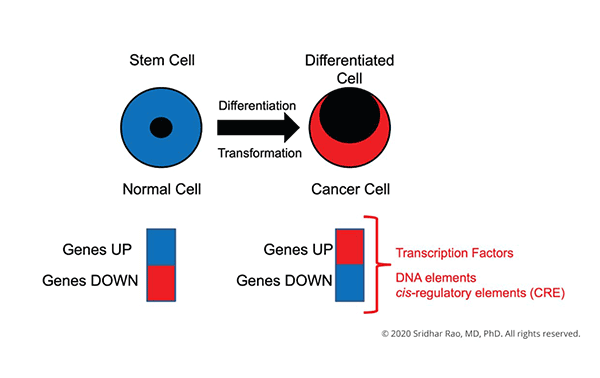
The central focus of my laboratory is to understand how changes in gene expression ultimately lead to cell-fate decisions (Figure 1).

The precise control of cell-fate changes are required for normal development and aberrations in the process can lead to diseases including cancer.

Stem Cell Differentiation

Stem cells are capable of differentiating into other types of stem cells. For example, hematopoietic stem cells (HSCs) can divide and differentiate into all the different blood cell lineages such as red cells, white cells, and platelets.

This process is coordinated by changes in gene expression, in which a subset of genes need to go UP in their expression, and a different subset need to go DOWN. Aberrations in this process can cause not enough differentiated cells to be made, but also ultimately lead to cancers such as leukemia. All aspects of gene expression are controlled by two types of factors. Trans-acting factors, suc as DNA-binding proteins like transcription factors which then bind DNA segments called cis-regulatory elements.

Stem Cell DifferentiationFigure 1: Stem Cell Differentiation Illustration
Enhancer Function

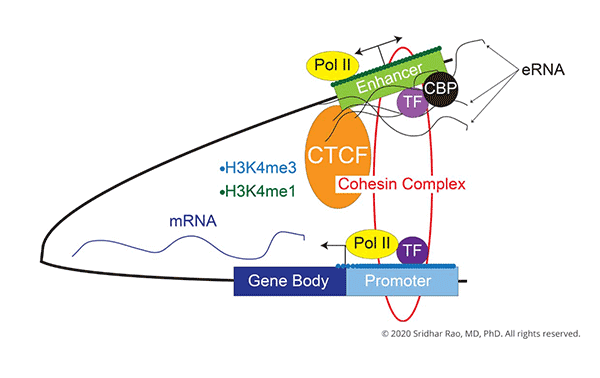
Specifically, our lab is focused how cis-regulatory elements (CREs) which are located far away from the genes they regulate operate (Figure 2). These distal CREs, globally referred to as enhancers, play a central role in regulating gene expression in a temporal and cell-type specific manner. The long-term goal of our lab is to understand how these CREs regulate both normal mammalian development, but also how mutations which prevent proper enhancer function cause diseases including leukemia.

distal CREs (enhancers)Figure 2: distal CREs (enhancers) illustration

A schematic illustrating how distal CREs (enhancers) are brought into close physical contact within the nucleus with the genes they regulate through a process termed chromatin looping. The looping is mediated by both CTCF and the cohesin complex.

Enhancers themselves are bound by the transcription factors (TFs) and the histone acetyltransferase CBP. In addition, highly active enhancers are transcribed by RNA Pol II to produce long non-coding RNAs called eRNAs.

Laboratory Projects

Project 1

Transcriptional enhancers, eRNAs, and epigenetic control of blood pressure. Many polygenic traits have been examined by genome wide association studies (GWAS) to identify different single nucleotide polymorphisms (SNPs) which contribute. Importantly, the majority of these SNPs lie within non-coding regions of the genome, making it a challenge to understand how they influence their trait. Our lab hypothesizes that noncoding SNPs operate through epigenetic mechanisms to regulate effector gene expression. We use blood pressure as a model since it is one of the most widely studied polygenic traits but also is a critical risk factor for cardiovascular disease, a leading killer in the developing world. In particular, our lab is focused on how different enhancers work to regulate gene expression through epigenetic mechanisms including chromatin looping, noncoding RNAs termed eRNAs, and histone epigenetics.

Project 2

The molecular mechanism of cohesin complex mutations in cancer. The cohesin complex plays a central role in gene expression by facilitating and stabilizing chromatin loops which permits enhancers to be brought into close physical proximity of the genes they regulate within the nucleus. Importantly, mutations within core cohesin complex subunits (STAG2, SMC3, SMC1A, RAD21) are found in 10-20% of patients with Acute Myeloid Leukemia (AML).  Our lab is focused on understanding how these mutations promote leukemia development, but also how they interact with own known leukemic drivers.

Lab Team

Puja Agrawal

Puja Agrawal

MSTP Student

Molecular function of enhancers in early development

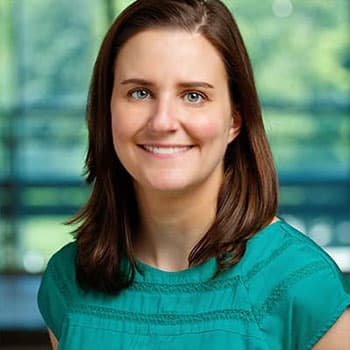
Puja Agrawal grew up in Cupertino, Calif., and earned her bachelor of science in molecular and cell biology from the University of California Berkeley. In Dr. Rao’s lab, she is interested in studying how enhancer-promoter interactions regulate gene expression to drive differentiation in mouse embryonic stem cells through molecular and NGS methods. In her free time, Puja enjoys cooking, baking, crocheting and photography.

Alison Meyer

Alison Meyer

Research Scientist

Genetic cooperativity of cohesin mutations in leukemia

Alison Meyer, PhD, grew up in Beaver Dam, Wisc. She earned her bachelor’s degree in biology from Marquette University and went on to earn a master’s degree in biochemistry at the University of Wisconsin Madison, where she worked with Dr. Elizabeth Craig on molecular chaperones in ribosome biogenesis. She completed postdoctoral training at Duke University, where she transitioned to cancer research.

In Dr. Rao’s lab, Dr. Meyer studies the genetic interaction between two common mutational drivers of acute myeloid leukemia: NPM1c and cohesin haploinsufficiency. In her free time, Dr. Meyer enjoys running, baking and reading.

Kirthi Pulakanti

Kirthi Pulakanti

Bioinformatic Analyst

Kirthi Pulakanti, MS, grew up in Hospet Karnataka, India. She earned her bachelor of engineering in biotechnology in India and her MS in computational sciences at Marquette University and the Medical College of Wisconsin. In Dr. Rao’s lab, she works on NGS data and is interested in enhancer biology and epigenetics in leukemia. In her free time, Kirthi enjoys cooking and reading to and playing board games with her sons.

Cary Stelloh

Cary Stelloh

Lab Manager

Cary Stelloh is a lifelong resident of the Milwaukee area and earned a bachelor of arts in biological sciences from the University of Wisconsin Milwaukee. In Dr. Rao’s lab, he serves as the lab manager of animal husbandry. Outside of the lab, Cary is a movie fanatic, history buff, recreational runner and proud dog parent.

Juliana Argote Alvarez
Assistant Professor

Khanmi Kasomva
Postdoc

Josiah Murray
Graduate Student

Atrayee Ray
Postdoc

Research Tools Used in the Rao Lab

  1. Genomic Editing with CRISPR/Cas9: Dr. Rao is the scientific director of the BRI’s Genomic Editing core, and has a wealth of experience with this powerful emerging technology.
  2. Transcriptomics: Dr. Rao’s lab uses both bulk and single cell RNA-seq to explore genome-wide changes in expression. In particular, his lab has a dedicated bioinformatics analyst, but trainees are expected to learn how to analyze these types of datasets independently.
  3. Epigenomics: Our lab has used various forms of chromatin immune oprecipitations could with sequencing (ChIP-seq) to interrogate changes in chromatin marks known to be critical to gene expression. More recently, our lab has adopted CUT&Tag (Hatice et al, Nat Communication, 2019; PMC6488672).
  4. Animal models: We use a large number of genetically-modified mice to understand how leukemia develops in vivo.

Grant Support

  • MCW Cancer Center IDEA award
    MPI- Drobyski (MCW) and Rao (Versiti
    01/2025-12/2025
    Immunologic and Molecular Determinants of Myeloid Sarcoma
  • R01 AI183571
    MPI- Malarkanan (MCW), Rao (Versiti), Kee (University of Chicago)
    12/2024-11/2029
    GATA2-TGF beta-TAL1 pathway as a critical mediator of NK Cell development
  • P01 HL149620
    Liang (PI), Role: Project 2, Project 3 and Core B Co-Investigator
    08/15/20-07/31/25
    Genetic and Epigenetic Mechanisms of BP Regulation
  • R01 DK134064
    MPI-Battle and Rao
    08/01/22-05/31/26
    Defining GATA4’s Molecular Function in Gastric Cell Biology

Selected Publications


Use the resource links below to review a current list of publications, view Medical College of Wisconsin and Children's Hospital of Wisconsin faculty pages.

Resources and Datasets

Videos, Lab Photos, and Other Media

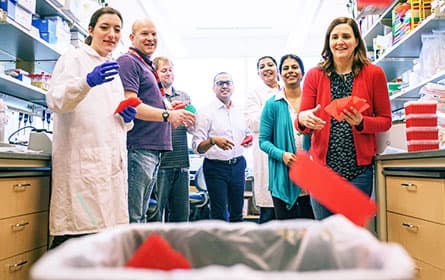
A fun break at the Rao lab.
This section will expand as additional multimedia and graphical resources are available. Use the links below to view the Research in a Minute video explaining Precision Medicine, or an educational video explaining research around Acute Myeloid Leukemia.


BloodFLOW Training Video

BloodFLOW Training Video

New Therapeutic Approaches for AML

Dr. Rao describes background information on Acute Myeloid Leukemia (AML) and explains some of the recent advances in Diagnostic Testing.

Watch Video
Research in a Minute Video

Research in a Minute Video

What is Precision Medicine?

Over 10,000 children are diagnosed with cancer in the US each year and it remains a leading cause of death. Dr. Rao gives a brief introduction how his laboratory is working to fight this tragedy.

Watch Video